Where It Began
🏝️
The Island of St. Vincent — Yurumein
The Garifuna story begins on the island of St. Vincent in the Eastern Caribbean, which they call Yurumein (Home of the Hummingbird). Here, the Kalinago (Island Carib) people had lived for centuries. When enslaved Africans escaped from shipwrecked and captured slave ships in the 1600s, they found refuge among the Kalinago. Over generations, the two peoples intermarried and blended their languages, spirituality, and culture — creating an entirely new people: the Garinagu (the Garifuna people).
⚔️
The Carib Wars — Fighting for Yurumein
The British Empire wanted St. Vincent. The Garifuna, led by the legendary Chief Joseph Chatoyer, fought two major wars — the First Carib War (1769–1773) and the Second Carib War (1795–1797) — to defend their island. Chatoyer became the first national hero of St. Vincent. But the Garifuna were ultimately defeated.
💀
The Exile — Balliceaux Island, 1796
After defeat, the British exiled over 5,000 Garifuna to the barren island of Balliceaux, where nearly half died of disease and starvation. The survivors — around 2,500 — were then deported to Roatán Island, Honduras in 1797. They arrived with nothing but their language, their drums, and their spirit.
🚢
The Journey to Belize — November 19, 1802
From Honduras, Garifuna families began moving along the Central American coast. On November 19, 1802, the first Garifuna settlers arrived in Dangriga (then called Stann Creek Town), Belize — led by Alejo Beni. This date is now celebrated as Garifuna Settlement Day, a national holiday in Belize. More arrived in 1823, settling Punta Gorda, Hopkins, Barranco, and the southern coast.
Where They Settled
The Garifuna chose the coast — the sea was their highway, their food source, and their spiritual home. Their communities are all along the southern and central coastline of Belize.
🥁 Dangriga
The Garifuna capital of Belize. Home of Settlement Day celebrations. Stann Creek District.
🌊 Hopkins
Coastal village. Known for pristine beaches and authentic Garifuna life.
⚓ Barranco
Southernmost Garifuna village. Birthplace of Andy Palacio & Paul Nabor.
🌴 Punta Gorda
Toledo capital. Strong Garifuna, Maya, and East Indian community.
🏖️ Seine Bight
Placencia Peninsula. Traditional fishing and crafts community.
🌿 Georgetown
Stann Creek District. Rural Garifuna village with strong traditions.
The Legends
🎵
ANDY PALACIO
Cultural Ambassador · UNESCO Artist for Peace · 1960–2008
Born on December 2, 1960 in the village of Barranco, Toledo District, Andy Vivian Palacio was more than a musician — he was the voice of a people. He grew up immersed in traditional Garifuna culture, and after working as a teacher and participating in a literacy campaign in Nicaragua, he returned to Belize with a fire to save his culture.
He joined the legendary Turtle Shell Band after Pen Cayetano, and his star rose quickly. He won Best New Artist at the Caribbean Music Awards in 1991 — the first Belizean artist to achieve international music recognition. He was appointed Belize's Cultural Ambassador and Deputy Administrator of the National Institute of Culture and History in 2004.
His masterpiece — the album Wátina (2007), recorded with The Garifuna Collective — became one of the most celebrated world music albums ever made. It won the WOMEX Award and earned Andy the designation of UNESCO Artist for Peace — the first Caribbean and Central American artist to receive this honour.
Andy Palacio died on January 19, 2008 at age 47 following a stroke. Belize wept. The world felt the loss. His music lives forever.
He joined the legendary Turtle Shell Band after Pen Cayetano, and his star rose quickly. He won Best New Artist at the Caribbean Music Awards in 1991 — the first Belizean artist to achieve international music recognition. He was appointed Belize's Cultural Ambassador and Deputy Administrator of the National Institute of Culture and History in 2004.
His masterpiece — the album Wátina (2007), recorded with The Garifuna Collective — became one of the most celebrated world music albums ever made. It won the WOMEX Award and earned Andy the designation of UNESCO Artist for Peace — the first Caribbean and Central American artist to receive this honour.
Andy Palacio died on January 19, 2008 at age 47 following a stroke. Belize wept. The world felt the loss. His music lives forever.
🏆 WOMEX Award 2007
🕊️ UNESCO Artist for Peace
🎵 Wátina — World Music Album of the Year
🇧🇿 Belize Cultural Ambassador
🎸
PAUL NABOR — "NABI"
King of Paranda · Buyei (Spiritual Leader) · 1928–2014
Born Alfonso Palacio on January 26, 1928 in Punta Gorda, Belize, Paul Nabor — known to all as "Nabi" — was a man who lived many lives. He worked banana plantations, mahogany camps, and as a chiclero before dedicating himself to music. He taught himself guitar and began composing his own Garifuna paranda songs at just 18 years old.
Nabi was not just a musician — he was a Buyei, a Garifuna spiritual healer and temple leader. He built and led a Garifuna temple in Punta Gorda, providing spiritual comfort to his community until the end of his life. He was also a sailor, boxer (the name "Nabor" came from his boxing days), fisherman who built his own dugout dory, and a man of legendary storytelling.
His most famous song, "Naguya Nei" (I Am Moving On), written in memory of his deceased sister, became a Garifuna anthem. He featured on Andy Palacio's final album Wátina (2007) and gained international recognition late in life. The Belizean government gave him an official state funeral when he died on October 22, 2014 at age 86 — carried on the shoulders of the Belize Defence Force.
Nabi was not just a musician — he was a Buyei, a Garifuna spiritual healer and temple leader. He built and led a Garifuna temple in Punta Gorda, providing spiritual comfort to his community until the end of his life. He was also a sailor, boxer (the name "Nabor" came from his boxing days), fisherman who built his own dugout dory, and a man of legendary storytelling.
His most famous song, "Naguya Nei" (I Am Moving On), written in memory of his deceased sister, became a Garifuna anthem. He featured on Andy Palacio's final album Wátina (2007) and gained international recognition late in life. The Belizean government gave him an official state funeral when he died on October 22, 2014 at age 86 — carried on the shoulders of the Belize Defence Force.
🎵 King of Paranda Music
🙏 Garifuna Buyei — Spiritual Leader
🎸 Naguya Nei — Garifuna Anthem
🇧🇿 Official State Funeral
🎨
PEN CAYETANO
Creator of Punta Rock · Painter · Cultural Revolutionary · Born 1954
Born in Dangriga in 1954, Delvin "Pen" Cayetano MBE is the man who invented Punta Rock — the most popular music genre to come out of Belize. In 1978, he witnessed young Garifuna losing connection with their culture at a ceremony honoring pioneer Thomas Vincent Ramos. He went home and created something new.
In 1979–1980, Pen formed the Original Turtle Shell Band — adding electric guitars and turtle shell percussion to traditional Garifuna punta rhythms, creating a modern, youth-facing sound. In 1983, The Turtle Shell Band performed at the New Orleans Jazz and Heritage Festival — taking Belizean music to the world stage for the first time.
Pen is also a celebrated painter whose artwork hangs in galleries and institutions worldwide. He received the Garifuna Music Lifetime Achievement Award in 2018. He is living proof that one person's love for their culture can change the world.
In 1979–1980, Pen formed the Original Turtle Shell Band — adding electric guitars and turtle shell percussion to traditional Garifuna punta rhythms, creating a modern, youth-facing sound. In 1983, The Turtle Shell Band performed at the New Orleans Jazz and Heritage Festival — taking Belizean music to the world stage for the first time.
Pen is also a celebrated painter whose artwork hangs in galleries and institutions worldwide. He received the Garifuna Music Lifetime Achievement Award in 2018. He is living proof that one person's love for their culture can change the world.
🎵 Inventor of Punta Rock
🐢 Original Turtle Shell Band
🎨 World-Renowned Painter
🏆 Lifetime Achievement Award
🎼
THE GARIFUNA COLLECTIVE
World Music Ensemble · Keepers of the Flame
Co-founded and led by Andy Palacio, The Garifuna Collective is a multigenerational group of Garifuna musicians from Belize, Guatemala, and Honduras who continue to carry the flame. Their landmark album Wátina (2007), produced by Ivan Duran at Stonetree Records, featured the great Paul Nabor and became one of the most critically acclaimed world music albums ever recorded.
After Andy Palacio's passing, The Garifuna Collective continues to tour and record in his memory, performing at venues worldwide and keeping Garifuna language, music, and spirituality alive for new generations.
After Andy Palacio's passing, The Garifuna Collective continues to tour and record in his memory, performing at venues worldwide and keeping Garifuna language, music, and spirituality alive for new generations.
🌍 International World Music Touring
💿 Wátina — 2007 Masterpiece Album
Culture & Traditions
🥁
Dügü — The Ancestral Feast
The most sacred Garifuna ceremony. A multi-day spiritual ritual to honor deceased ancestors and seek their guidance. Involves drumming, singing, dancing, and feasting. Only performed by a Buyei (spiritual leader).
🎵
Paranda Music
Traditional acoustic Garifuna music — guitar, percussion, and soulful vocals sung in the Garifuna language. Rooted in African rhythms and Arawak melody. Paul Nabor was its greatest living master.
🐠
Fishing & the Sea
Garifuna men have always been fishermen. The dugout dory — carved from a single tree trunk — is a symbol of Garifuna identity and skill. The sea feeds the community and connects them to their ancestors.
🍲
Hudut — The National Dish of the Garifuna
Fish cooked in rich coconut broth served with fufu — pounded green and ripe plantain. Eaten at ceremonies, celebrations, and Sunday family meals. Cassava bread is also central to Garifuna cuisine.
🗣️
The Garifuna Language
A unique language of mixed Arawak, Carib, French, English, and African roots. UNESCO listed it as an Intangible Cultural Heritage in 2001. Garifuna is endangered — fewer young people speak it fluently — making the work of Andy Palacio and The Garifuna Collective even more vital.
"I am moving on… but I leave my music, my people, my spirit behind."— Paul Nabor, "Naguya Nei"
The Sacred Instruments

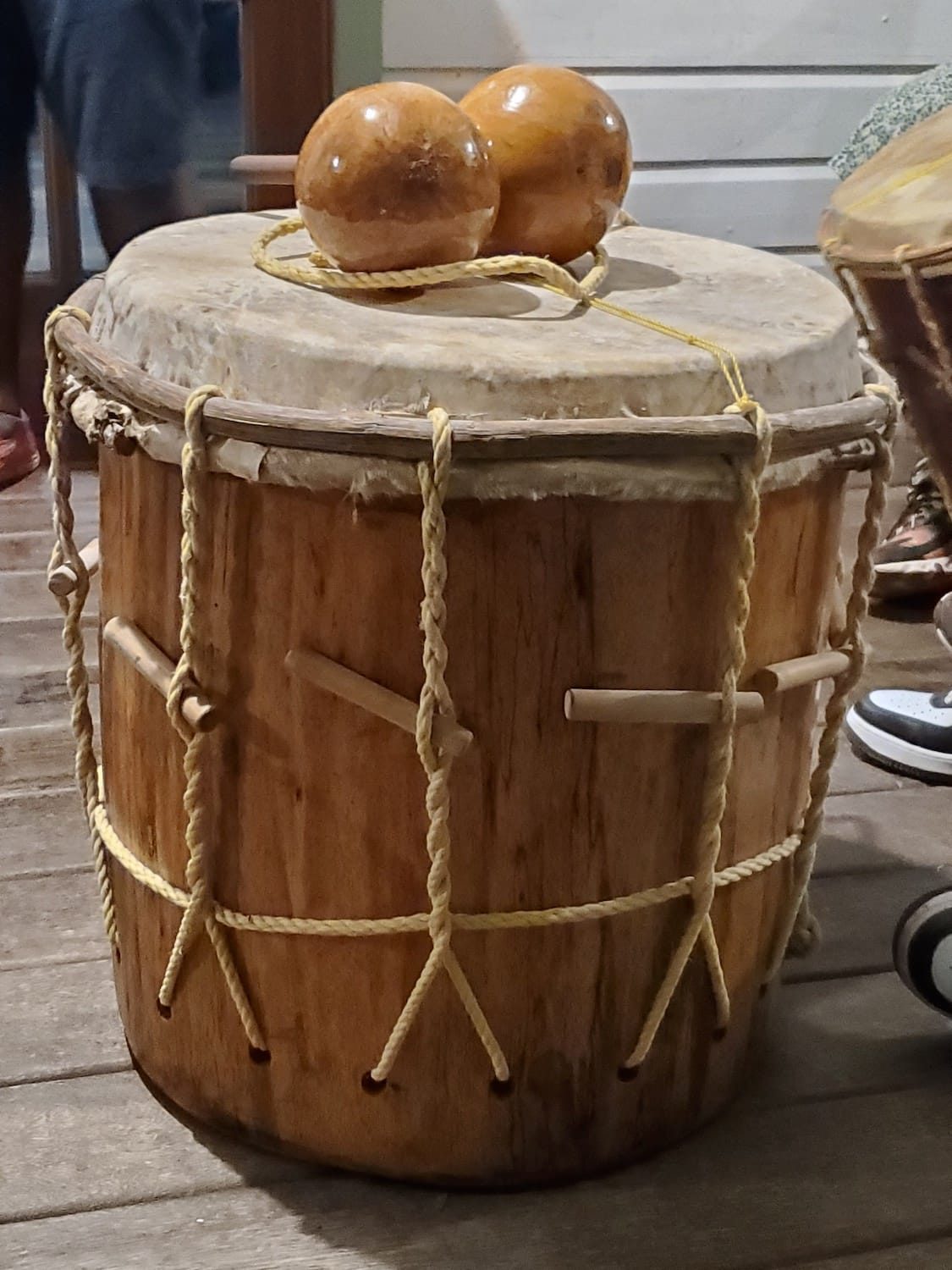
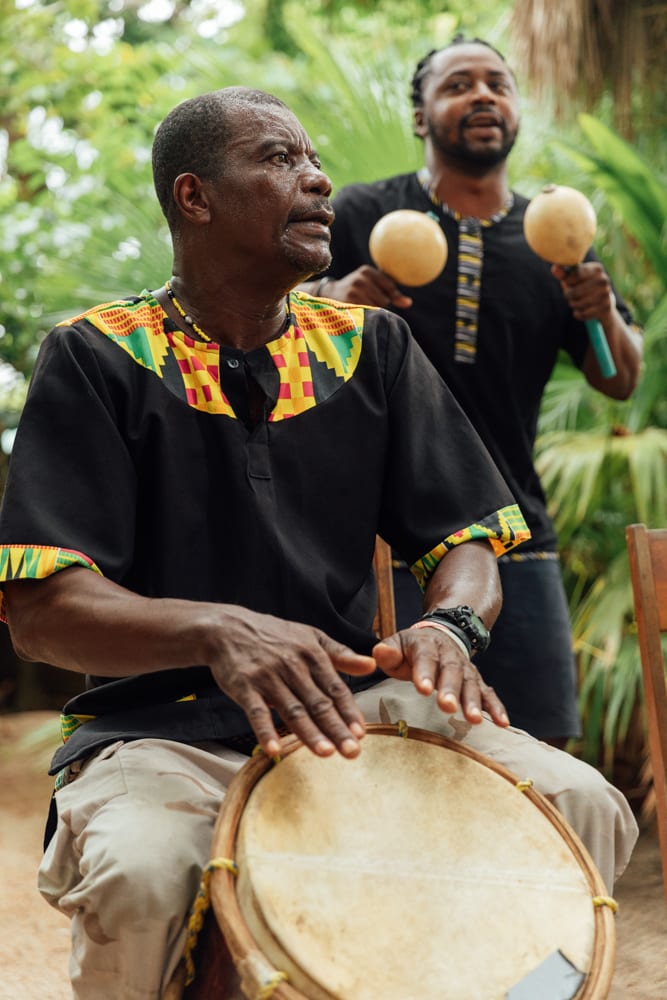
🥁
GARINAGU FOREVER
From the shores of Yurumein to the streets of Dangriga — the Garifuna people have survived exile, colonialism, and erasure. They did not just survive. They created music that moves the world, food that feeds the soul, and a culture so powerful that UNESCO had to recognize it. RideBelize is proud to serve every Garifuna community from Hopkins to Barranco.
Serving Hopkins, Dangriga, Barranco, Punta Gorda & every Garifuna community. 🇧🇿